Shop Now
Shop Now


Targeted support for cellular energy, cardiovascular function, fertility, and healthy aging
Coenzyme Q10 is a nutrient that tends to matter most in specific situations—particularly with aging, statin use, and certain fertility contexts. Outside of those, its impact is often more limited.
Most likely worth considering if:
Targeted support for cellular energy, cardiovascular function, fertility, and healthy aging
Coenzyme Q10 is a nutrient that tends to matter most in specific situations—particularly with aging, statin use, and certain fertility contexts. Outside of those, its impact is often more limited.
Most likely worth considering if:
You can probably skip this if:
In these situations, this is unlikely to add much and may not be worth the cost.
This is one of the situations where a targeted supplement like CoQ10 can make sense. It’s not something most people need—but in the right context, it can be a reasonable and often appropriate addition.
CoQ10 is best thought of as a context-dependent supplement, not a general wellness product.
It tends to be most useful in situations where CoQ10 levels are more likely to be lower or more heavily used—such as aging, statin use, or certain fertility contexts. In those cases, it can play a meaningful supporting role in cellular energy production and overall function.
Outside of those situations, results are typically more modest and less predictable. This is not usually a high-impact supplement for otherwise healthy individuals without a specific reason to use it.
CoQ10 becomes more relevant in certain situations than in others.
Natural production declines with age, statins can lower levels further, and the nutrient is often discussed in connection with fertility, mitochondrial energy, and cardiovascular support.
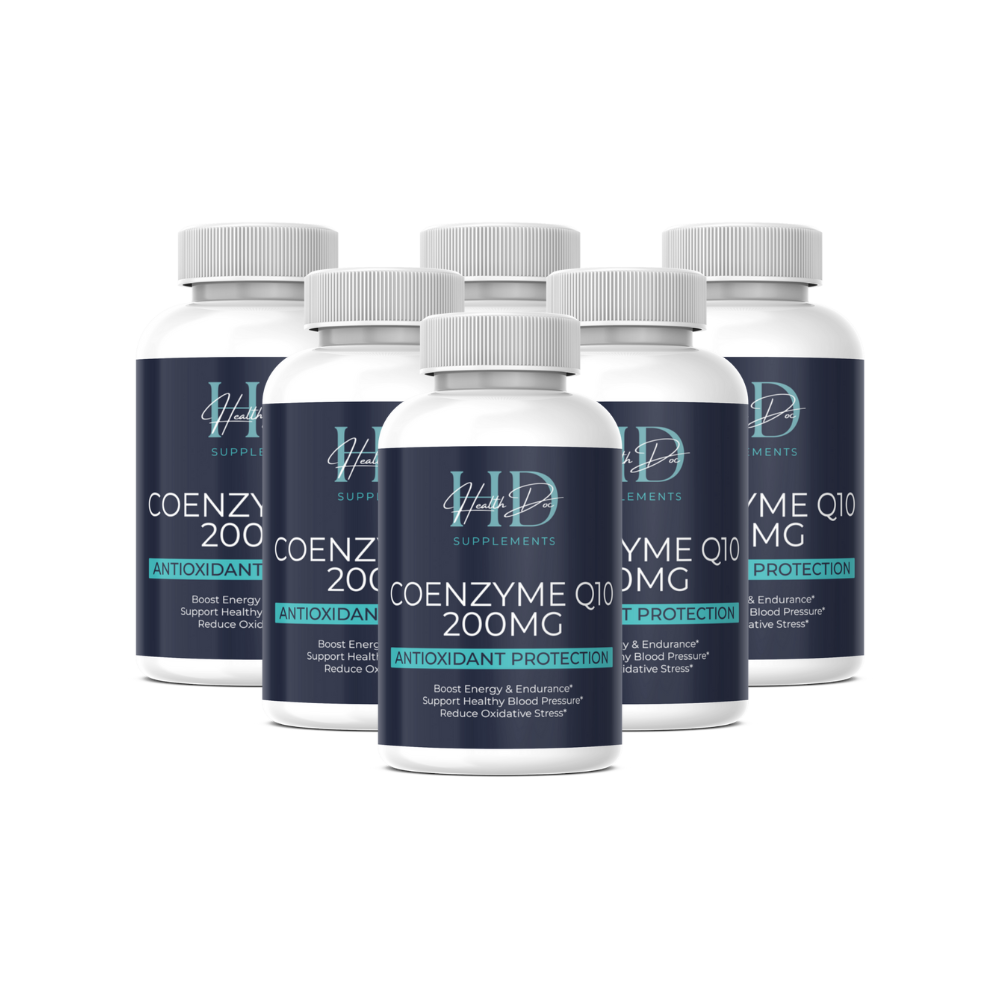
A 200 mg dose in the stable ubiquinone form keeps the formula simple and flexible while still being strong enough to fit several common use cases—without pushing into unnecessarily high dosing.
Just as importantly, this avoids overcomplicating the formula. CoQ10 is typically used for specific reasons. Keeping it focused makes it easier to use appropriately.
Each serving provides:
There is a lot of confusion around Coenzyme Q10’s forms.
You may have heard that ubiquinol is the “active” form and is better absorbed. That’s a common claim—but it’s an oversimplification.
In reality, both ubiquinone and ubiquinol are active forms of CoQ10. They just have different jobs. Your body is constantly converting between them based on what it needs.
Research suggests that much of the ubiquinol form converts back to ubiquinone before it is absorbed in the gut. Almost all the studies showing CoQ10’s benefits used ubiquinone. In practice, most people do just as well with ubiquinone.
For that reason, starting with ubiquinone is usually a reasonable and cost-effective approach.
There is, however, a small subset of people who may not absorb or utilize ubiquinone as effectively. In those cases, ubiquinol can make more sense - but it is typically something to consider only after giving ubiquinone a fair trial.
A practical approach is to use ubiquinone consistently for several months at a meaningful dose before deciding whether a switch to ubiquinol is worth exploring.
Some uses of CoQ10 are better supported than others.
This is best viewed as a context-dependent supplement, where outcomes depend heavily on why it’s being used in the first place.
Once you’ve decided a supplement makes sense in theory, the next question is whether the product itself is reliable. Quality and consistency matter.
Take 1 capsule daily, ideally 20–30 minutes before a meal that contains some healthy fat, with water, or as directed by your healthcare professional.
Because CoQ10 is fat-soluble, taking it with fat helps absorption. Morning or lunch is usually a better fit than evening, since some people find it mildly energizing later in the day.
If a higher dose is being used, splitting the dose can improve absorption.
Benefits may begin to show within a few weeks, with fuller effects often taking longer.
If you don’t notice a meaningful difference after consistent use, it’s reasonable to step back and reassess whether this is worth continuing.
Each bottle contains 30 capsules (30-day supply)
*These statements have not been evaluated by the Food and Drug Administration. This product is not intended to diagnose, treat, cure, or prevent any disease.
Despite marketing claims about Ubiquinol's superior absorption, the scientific data doesn't support this assertion. Research shows that, due to its inherent instability, Ubiquinol will begin to spontaneously revert to the more stable Ubiquinone form while still sitting on the shelf prior to purchase. Once ingested and exposed to oxygen and stomach acid, most of the remaining Ubiquinol will also converts. Only 15-20% of the original dose is actually absorbed as Ubiquinol. While a small percentage of people may respond better to Ubiquinol, most will do just as well with the less expensive Ubiquinone —the form used in almost all of the studies showing CoQ10's benefits.
The optimal dosage depends on your specific health needs. For general health maintenance, 100-200mg daily is typically sufficient. Those taking statins or with specific health concerns may benefit from higher doses (200-400mg) and those taking CoQ10 to help improve fertility may be put on 600mg/day or even more. Our product provides 200mg per capsule, allowing flexible dosing to meet your individual needs. To improve absorption, split your dose if taking more than 200mg/day as there is a limit to how much can be absorbed at one time. These are only general guidelines. Discuss supplementation with your healthcare provider to determine how much is right for you.
CoQ10 is fat-soluble, so taking it with meals containing some healthy fat improves absorption. Many people take it with breakfast or lunch as taking it late in the day can interfere with sleep. If you're taking statins, which inhibit CoQ10 production, consider taking your CoQ10 at a different time than your medication for optimal benefit.
Yes, our CoQ10 supplement is completely gluten-free. It contains no wheat, barley, rye, or other gluten-containing ingredients. We regularly test for gluten contamination to ensure safety for those with celiac disease or gluten sensitivity. In addition, our CoQ10 is also Organic, vegan-friendly, non-GMO, lactose free, corn free, and contains no added sugar.
Most people begin noticing benefits within 2-4 weeks, though full effects may take 8-12 weeks as CoQ10 levels build up in your tissues. Consistency is key—daily supplementation provides the best results.
CoQ10 is generally well-tolerated and safe to take with most medications. However, it may interact with blood thinners like warfarin, some chemotherapy drugs, and insulin. Always consult your healthcare provider before starting any supplement if you're on prescription medications.
Our CoQ10 is formulated for maximum bioavailability and effectiveness. We use high-quality, pure Ubiquinone at a clinically relevant dosage (200mg), and our vegan-friendly capsules ensure the supplement is accessible to those with dietary restrictions. Our rigorous quality testing exceeds industry standards.
Yes. Statins can deplete your body's natural CoQ10 levels, which may contribute to muscle pain and fatigue experienced by some users. Supplementing with CoQ10 may help mitigate these side effects.*
Yes. CoQ10 supports heart function by promoting energy production in heart muscle cells and providing antioxidant protection. These benefits can help maintain cardiovascular health even in those without existing heart conditions, potentially offering preventative benefits.*
Yes, our CoQ10 supplement is completely vegan-friendly. The capsules are made from plant-based materials rather than gelatin, and all ingredients are sourced without animal products or testing.
Yes. CoQ10's ability to improve cellular energy production and to protect cells from oxidative damage by free radicals has been shown to improve both sperm and egg health resulting in higher conception rates in couples who supplement with it compared to those who do not.*

.png)
.webp)